
Quick Summary
Commercial HVAC cleaning requirements in Connecticut focus on proactive indoor air quality management and condition-based inspections rather than rigid calendar mandates. Federal EPA guidelines and NADCA industry standards dictate that mechanical duct cleaning should occur during unoccupied hours using HEPA-filtered containment, especially to control mold risks driven by regional coastal humidity. Facility managers can rely on Redwood Air Duct Cleaning Service Bridgeport to assess system contamination, execute compliant component cleanings, and maintain detailed service records for audits.
Commercial HVAC Cleaning Requirements CT: Fast IAQ Guide
Keeping commercial HVAC systems clean in Connecticut is essential for maintaining healthy indoor air and keeping operating costs under control. EPA guidance indicates that duct cleaning should occur when the building is unoccupied, and the air handling unit should not be used during the cleaning process.[1]
Redwood Air Duct Cleaning Service Bridgeport provides practical, reliable service across Fairfield County. We offer clear upfront estimates, rapid site visits, and thorough system cleanings that follow national standards. Contact our team to schedule an on-site commercial HVAC inspection and quote. See also HVAC Deep Cleaning Cost and Free Quote in Bridgeport – Call Now-10% Off – Same-Day Service – Free Estimate.
Commercial HVAC Cleaning Requirements in CT: Compliance Overview
Connecticut-specific commercial HVAC cleaning requirements were not found, and available guidance focuses on preventive maintenance and indoor air quality practices. Rather than enforcing a fixed state mandate, standard industry guidelines recommend inspecting and servicing air systems when dust accumulation, organic growth, or airflow restrictions occur.[4]
Following a strict calendar schedule often leaves commercial properties exposed. Because local coastal weather introduces high levels of moisture, contaminants can build up rapidly between arbitrary maintenance dates. Facilities must monitor their equipment continuously and address moisture, particulate loads, and filter bypass as conditions require.
Core State and Federal IAQ Standards
According to EPA guidance, duct cleaning should occur when the building is unoccupied, and the air handling unit should not be used during the cleaning process. Federal guidelines and OSHA workplace air quality rules emphasize regular preventative maintenance and immediate source removal whenever physical debris or airflow issues appear. In addition, the NADCA ACR Standard serves as an industry standard and commercial specification, directing facility teams to assess systems based on observed contamination levels rather than arbitrary timelines.[2]
Key Compliance Checklist for Facility Managers
- Conduct condition-based visual checks: Inspect air handling units, internal blowers, and duct interiors regularly for dirt accumulation and airflow restrictions.
- Monitor condensation and moisture: Inspect drain pans, coils, and interior duct lining for water pooling caused by regional summer humidity.
- Perform work during off-hours: Schedule mechanical agitation and extraction when buildings are empty, using negative air containment to prevent particulates from migrating into tenant areas.
- Document all maintenance work: Keep dated service records, before-and-after photographic proof, and filter replacement logs on file for facility audits and maintenance tracking.
Connecticut IAQ Regulations, OSHA, and Coastal Humidity Thresholds
Connecticut indoor air quality guidance prioritizes proactive hazard management over simple checklist routines. Under OSHA general safety clauses and health recommendations, facility operators are encouraged to address airborne contaminants and eliminate moisture issues before they spread through the ventilation network.
Why Calendar-Based Schedules Create Risk
Cleaning ductwork solely on a rigid calendar schedule creates blind spots. Prompt intervention is recommended when mold, mildew, or particulate buildup threatens indoor air. EPA guidance specifies that duct cleaning should occur when the building is unoccupied, and the air handling unit should not be used during the cleaning process. Technicians must bring dedicated HEPA-filtered vacuum units to capture debris directly from the duct runs.[5]
Long Island Sound Humidity and Mold Growth
Facilities across Bridgeport, Stratford, and nearby coastal towns deal with heavy marine humidity throughout the summer months. When damp outdoor air hits cool supply plenums, condensation forms quickly. Without proper inspections and prompt cleaning, this moisture turns dust into breeding grounds for microbial growth. Regular condition checks by experienced commercial air duct cleaning specialists such as Redwood Air Duct Cleaning Service Bridgeport help catch these issues before they turn into major remediation projects.
Key Commercial HVAC Components: Symptoms, Inspection, and Maintenance
Commercial mechanical systems require thorough, component-level care to stay efficient and preserve indoor air quality.
Supply and Return Ducts
Return ducts pull in dust, paper fibers, and skin cells from occupied spaces, while supply runs distribute conditioned air back to tenants. Commercial technicians use high-powered negative air vacuums combined with mechanical brushes to safely loosen and extract trapped debris without releasing it into work areas.
Evaporator Coils and Blower Wheels
Evaporator coils collect condensed water, making them magnets for dirt and organic buildup. When coils and blower wheels become coated, heat exchange drops, static pressure climbs, and energy bills rise. Routine cleaning restores system efficiency and prevents stale, musty odors from circulating through the building.
Air Handling Plenums and Mixing Boxes
Plenums and mixing boxes balance fresh outdoor intake with recirculated air. If sanitizing treatments are required within these compartments, EPA rules require using products specifically registered for HVAC applications, applied strictly according to manufacturer instructions under isolated containment.
Commercial HVAC Brands Serviced Across Greater Bridgeport
Need commercial hvac cleaning requirements ct?
We’re available now — call for a fast, free estimate.
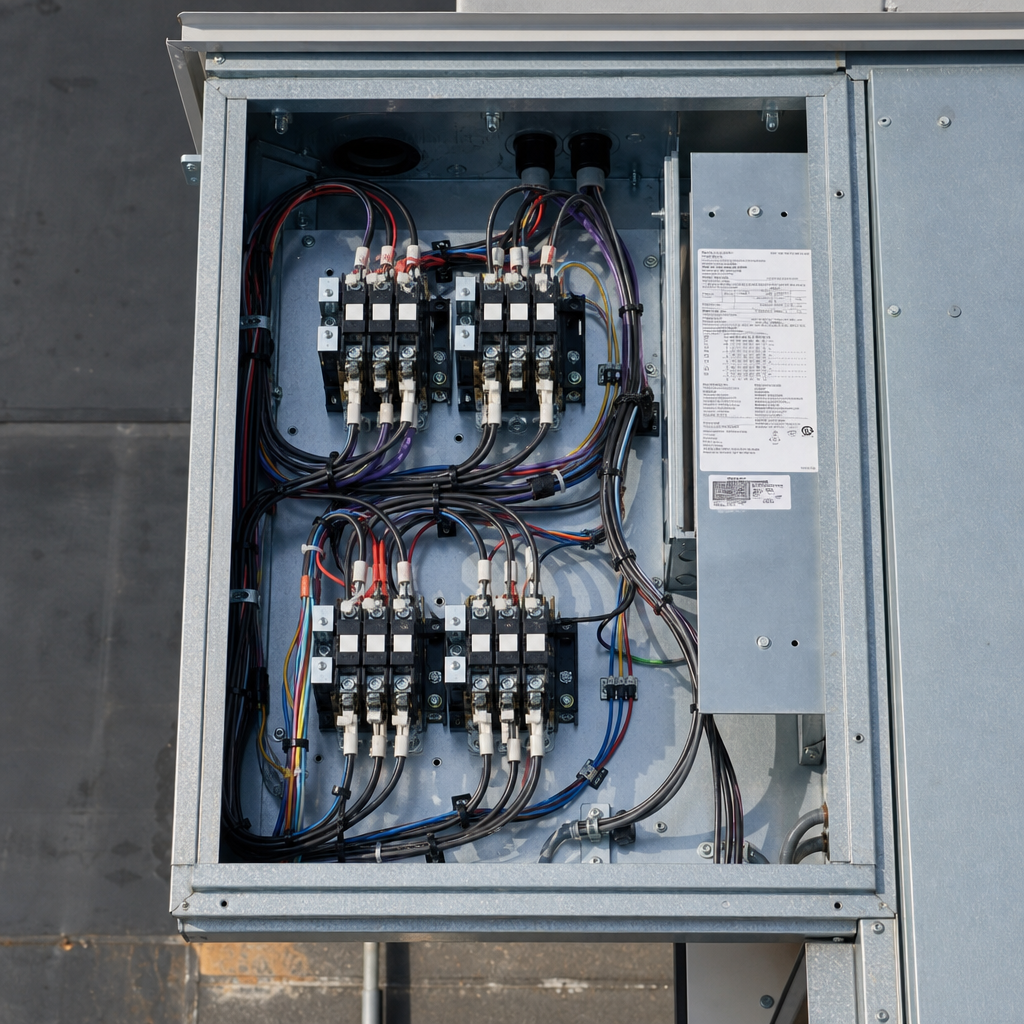
Commercial HVAC equipment comes in various configurations, from rooftop package units to multi-zone setups. Technicians service major platforms across Fairfield County, following manufacturer maintenance specifications and NADCA industry cleaning practices.
Carrier and Trane Commercial Systems
Carrier and Trane rooftop units (RTUs) handle demanding heating and cooling loads across Bridgeport commercial spaces. Servicing these units requires careful access to blowers, internal dampers, and multi-stage coils to clear dirt without damaging delicate fins or internal controls.
Lennox and Goodman Commercial Packages
Lennox and Goodman commercial package units and split systems need consistent filter checks and clean coils to run at peak capacity. Preventative maintenance programs should always combine clean ductwork with proper filter ratings and moisture controls to keep indoor air clean long after the initial service visit.
What Factors Influence Commercial HVAC Cleaning Costs in CT?
Commercial duct cleaning pricing is tailored to the exact specifications of each property rather than a generic flat fee.
Key Estimate Variables
Commercial estimates depend on several practical job factors, including:
- Total square footage of the facility and the linear feet of duct runs
- Accessibility of rooftop units, mechanical rooms, and ceiling crawl spaces
- The volume of particulate, grease, or moisture accumulation inside the system
- Whether auxiliary components, such as exhaust lines or reheat coils, require cleaning
- Specific outdoor air exchange requirements, which the EPA recommends maintaining at design levels or at least 15 CFM per person
How to Choose a Commercial Duct Cleaner in Fairfield County
Selecting the right service partner protects your property, keeps your tenants safe, and ensures your maintenance logs stand up to industry review.
Essential Qualifications and Standards
When reviewing commercial duct cleaning companies in the Bridgeport area, look for these credentials:
- Active commercial general liability and worker’s compensation insurance.
- Technicians trained in OSHA safety practices and NADCA ACR industry standards.
- Use of dedicated, truck-mounted or portable HEPA-filtered collection equipment.
- Clear, written documentation, including photographic before-and-after reports.
Working with Local HVAC Maintenance Specialists
Choosing a dependable local company gives you faster response times, clear communication via direct calls or text updates, and technicians who understand how coastal Connecticut weather affects commercial duct systems.
Commercial HVAC Cleaning CT: Frequently Asked Questions
Here are answers to common questions about commercial duct cleaning guidelines, pricing, and schedules across Connecticut.
How is commercial duct cleaning priced in Bridgeport, CT?
Pricing is based on facility square footage, system tonnage, accessibility of the ductwork, and contamination levels. Contact Redwood Air Duct Cleaning Service Bridgeport to set up an on-site evaluation and get a clear project estimate.
How often must commercial HVAC systems be cleaned in Connecticut?
Connecticut-specific commercial HVAC cleaning requirements were not found, and available guidance focuses on preventive maintenance and indoor air quality practices. Facilities typically clean duct systems when visual inspections reveal significant dust accumulation, mold, moisture issues, or airflow drops, following industry standards such as NADCA guidelines.[3]
Do CT commercial building codes require specific licensing for duct cleaners?
No Connecticut commercial building-code requirement was identified that specifically requires certified HVAC duct cleaners. Facility managers generally look for fully insured contractors who follow OSHA safety regulations and recognized commercial specifications like NADCA standards.
What documentation is provided after commercial duct cleaning?
A professional duct cleaning contractor provides a detailed completion report, including an itemized list of serviced components and before-and-after photos that serve as permanent records for building management and insurance carriers.
Need commercial hvac cleaning requirements ct?
We’re available now — call for a fast, free estimate.
Sources
- DOHS Fact Sheet On HVAC Duct Cleaning – ors.od.nih.gov (2010)
- Use of Disinfectants and Sanitizers in Heating, Ventilation … – epa.gov (2002)
- Moisture Control – epa.gov (2013)
- Reference Guide for Indoor Air Quality in Schools | US EPA – epa.gov (2001)
- Should You Have the Air Ducts in Your Home Cleaned? | US EPA – epa.gov
Related reading: Free Hvac Cleaning Quotes Bridgeport | Call Now-10% Off | Same-Day Service | Free Estimate
Related reading: Hvac Cleaning Bridgeport – Call Now-10% Off – Same-Day Service – Free Estimate
Related reading: Urgent Hvac Cleaning Bridgeport Ct – Call Now-10% Off – Same-Day Service – Free Estimate
Frequently Asked Questions
Can commercial HVAC cleaning be performed during normal business hours in Connecticut?
According to EPA and industry standards, commercial duct cleaning must occur when the building is unoccupied and the air handlers are shut down. Redwood Air Duct Cleaning Service Bridgeport schedules off-hours and weekend cleanings using HEPA-filtered negative containment to eliminate tenant disruption and prevent cross-contamination.
How does coastal Connecticut humidity impact commercial HVAC inspection frequency?
High humidity along Long Island Sound accelerates condensation on cool supply plenums and evaporator coils, creating ideal conditions for rapid mold growth. Rather than waiting for annual calendar service, coastal Connecticut facilities should perform condition-based visual inspections every six months to catch moisture issues early.
What documentation is required to prove commercial HVAC compliance during an IAQ audit?
Facility managers must maintain dated service receipts, filter replacement logs, and before-and-after photographic proof of cleaned air handling components. Redwood Air Duct Cleaning Service Bridgeport supplies itemized completion reports aligned with NADCA ACR standards to verify full OSHA and IAQ compliance.
About the author
 |
Sarah Miller Sarah Miller is a certified indoor air quality specialist with over seven years of experience in the HVAC maintenance industry. She holds a Bachelor of Science in Environmental Health from the University of Connecticut and frequently writes about practical strategies for maintaining clean, efficient, and safe home environments. |
Dusty vents or weak airflow at home?
We’re available now — call for a fast, free estimate.
Call Now - Free Estimate