
Last updated July 12, 2026
Air Duct Cleaning Permits, Codes & Inspections in CT: What You Need to Know
Here’s the reality most homeowners in Bridgeport don’t realize until they’re staring at an unexpected bill: air duct cleaning itself sits in a regulatory gray zone that changes the moment your technician touches a screwdriver to your ductwork. After 11 years crawling through attics and basements across Connecticut — from Black Rock to the East Side — we’ve seen homeowners pay $400 for unnecessary permits and, worse, skip critical ones that left them liable when mold or asbestos surfaced mid-job. This guide walks you through exactly where Connecticut draws the line between “just cleaning” and regulated mechanical work, what documentation protects you, and how to spot a contractor who understands the difference.
Quick Answer
Standard air duct cleaning in Connecticut does not require a building permit. However, if your contractor disturbs insulation, replaces duct sections, applies sealant, or discovers mold or asbestos-containing materials, the work crosses into permit-required or separately licensed territory — and your contractor must stop and notify you immediately.
Table of Contents
- Where Cleaning Ends and Permits Begin
- How Connecticut Building Code Classifies Duct Work
- When Mold Discovery Triggers Separate Licensing Requirements
- Asbestos and Vermiculite in Pre-1980 Bridgeport Homes
- How to Verify Contractor Insurance for Crossover Work
- What Paperwork to Keep for Future Home Sales or Claims
- Common Mistakes to Avoid
- When to Call a Professional
- Frequently Asked Questions
- The Bottom Line
Where Cleaning Ends and Permits Begin
The boundary isn’t as clear as homeowners hope. In our experience across Bridgeport’s housing stock — from 1920s colonials in Brooklawn to mid-century ranches in the North End — the physical act of cleaning rarely needs paperwork, but the conditions we encounter inside those ducts often do.
Standard duct cleaning (no permit required):
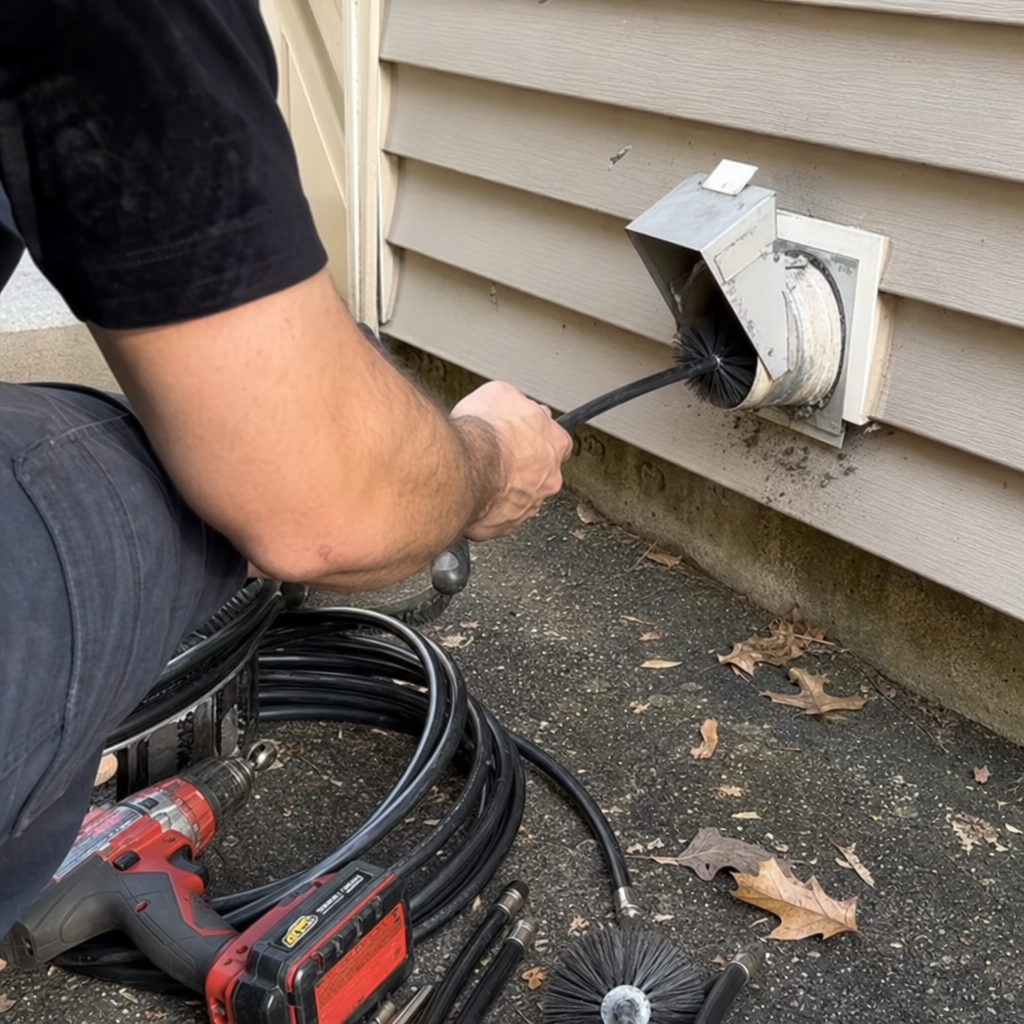
- Mechanical agitation and vacuum extraction of dust, debris, and particulate using systems like our Rotobrush and Nikro equipment
- Cleaning of accessible register boots, trunk lines, and branch ducts without disassembly
- Application of non-encapsulating sanitizers to interior duct surfaces (surface treatment only)
- Visual inspection with borescope cameras
Work that triggers permit or licensing requirements:
- Removal or replacement of any duct section, including flexible duct or fiberglass board
- Application of mastic sealant or tape that alters the duct system’s airtightness rating
- Disturbance of thermal insulation lining the duct exterior or interior
- Any modification to the HVAC return or supply configuration
- Discovery and handling of mold growth exceeding 10 square feet (CT Department of Public Health threshold)
- Disturbance of vermiculite insulation, which may contain asbestos
Here’s where Bridgeport’s older housing market complicates things. In neighborhoods like the Hollow and South End, we regularly encounter original duct systems from the 1960s and 1970s with internal fiberglass lining that’s degraded into friable material. Cleaning that lining without proper containment isn’t just sloppy — it’s a regulatory violation. Our Nikro portable HEPA containment systems are spec’d for exactly this scenario, but the contractor must recognize when standard cleaning crosses into remediation.
The Connecticut State Building Code, adopted from the International Mechanical Code (IMC), classifies duct modifications as mechanical work requiring permit and inspection. Cleaning, properly defined, falls outside this classification. But the moment your technician cuts open a duct to remove a collapsed section — common in Bridgeport’s salt-air-corroded galvanized systems — they’ve triggered Chapter 6 of the IMC permit requirements.
How Connecticut Building Code Classifies Duct Work
Connecticut operates under a unified building code administered by the State Building Inspector’s Office, with local jurisdictions handling enforcement. For Bridgeport homeowners, this means your permit requirements are interpreted by the Bridgeport Building Department, which follows the 2022 Connecticut State Building Code (based on 2018 I-codes with amendments).
The specific code sections that matter for duct work:
- IMC Section 603.1 — Duct construction and installation standards. Any new duct material or replacement must meet SMACNA standards and bear approved markings.
- IMC Section 603.9 — Duct insulation and lining requirements. Disturbing existing insulation triggers re-inspection obligations.
- IMC Section 602.2 — Return air openings and duct configuration. Altering return pathways requires engineered approval.
- Connecticut General Statutes §29-252 — Defines “minor work” exemptions; duct cleaning qualifies, but duct repair does not.
We’ve worked with Bridgeport inspectors on jobs where previous contractors failed to pull required permits. The pattern is consistent: a generalist HVAC company sends a junior tech with a shop vac, they discover disconnected ducts in a Webster Bank-area condo’s crawl space, “fix” it without permits, and the homeowner faces a failed inspection when they later refinance. The Building Department’s position is unambiguous: if you modified the mechanical system, you needed a permit, regardless of how the work started.
Practical guidance for homeowners:
- Ask your contractor explicitly: “Will this job involve any duct disassembly, sealant application, or insulation disturbance?”
- If yes, request they handle permit filing or provide documentation for you to file
- Permit costs in Bridgeport typically run $75–$150 for minor mechanical work — not enough to justify skipping
- Inspection scheduling in Bridgeport currently runs 5–10 business days; factor this into project timelines
When Mold Discovery Triggers Separate Licensing Requirements
This is where we’ve seen the most homeowner confusion — and contractor corner-cutting. Connecticut doesn’t license mold remediators at the state level, but the Department of Public Health maintains strict protocols under Guidelines for Mold Abatement Contractors (updated 2023). More critically, mold discovered during duct cleaning often reveals a larger HVAC system problem that falls under separate regulatory frameworks.
The 10-square-foot threshold matters enormously. Under DPH guidelines, mold growth covering less than 10 contiguous square feet within the duct system can be addressed by the cleaning contractor using appropriate containment and antimicrobial treatment. Exceed that threshold, and Connecticut recommends — though doesn’t mandate — specialized mold remediation licensing (such as IICRC Applied Microbial Remediation Technician certification).
In Bridgeport’s climate, we hit this threshold more often than inland contractors. The combination of Long Island Sound humidity, older construction with vapor barrier failures, and winter heating cycles that create condensation in unconditioned attics produces ideal mold growth conditions. We’ve documented active Aspergillus and Penicillium colonies spanning entire trunk lines in Seaside Park-area homes where attic ducts sit in seasonal condensation zones.
What a legitimate contractor must do upon mold discovery:
- Stop work immediately and photograph the affected area
- Notify the homeowner in writing with specific extent documentation
- Recommend third-party mold assessment if growth exceeds 10 square feet or involves HVAC mechanical components
- Provide containment protocol if continuing with cleaning of unaffected sections
- Document all findings for insurance or future disclosure purposes
Here’s what separates professional-grade operations from discount services: we carry Nikro portable containment and negative air machines, plus Abatement Technologies HEPA filtration, specifically for these Bridgeport climate realities. A contractor who shows up with nothing but a brush and vacuum has no capacity to handle mold discovery properly — and many simply don’t report it, leaving homeowners with undisclosed contamination.
Insurance implications are equally serious. Connecticut homeowners policies increasingly exclude mold claims where remediation was performed by unqualified contractors. If your duct cleaner finds mold, documents nothing, and “treats” it with over-the-counter spray, you’ve potentially voided future coverage.
Asbestos and Vermiculite in Pre-1980 Bridgeport Homes
This is the scenario that keeps us up at night — because we’ve seen it mishandled with genuinely dangerous consequences. Bridgeport’s housing inventory is among Connecticut’s oldest: roughly 42% of residential structures predate 1950, and another 28% were built between 1950 and 1980. That era coincides precisely with widespread asbestos use in duct insulation, furnace cement, and vermiculite attic insulation.
Critical distinction: cleaning around asbestos-containing material (ACM) versus disturbing it.
EPA’s National Emission Standards for Hazardous Air Pollutants (NESHAP) and Connecticut DEEP regulations create strict liability for anyone who knowingly disturbs friable ACM without proper licensing and notification. For duct cleaners, this creates specific obligations:
- Visual identification: White or gray fibrous wrapping on old ductwork, cardboard-like insulation with embossed manufacturer marks (often “Kaylo” or “Zonolite”), or loose-fill vermiculite in attics where ducts pass through
- Mandatory work stoppage: If ACM is suspected, work must cease until laboratory analysis confirms or rules out asbestos content
- No “minor disturbance” exemption: Connecticut DEEP interprets NESHAP strictly — even small amounts of friable ACM disturbance require licensed abatement contractor notification
We’ve encountered this repeatedly in Bridgeport’s East End and West Side neighborhoods, where original coal-to-oil conversion furnaces from the 1940s–1960s still have associated ductwork wrapped in asbestos air-cell insulation. The temptation for an unqualified contractor is to “work around it” or remove it quickly to complete the cleaning job. This is federal and state violation territory — and personal liability for the homeowner if fibers are released.
What you should demand from any duct cleaner working on pre-1980 Bridgeport housing:
- Confirmation they’ve completed EPA Renovation, Repair and Painting (RRP) training, even if not legally required for duct-specific work — it demonstrates hazard recognition capacity
- Written protocol for ACM identification and work stoppage
- Proof of liability insurance specifically covering asbestos-related claims (standard general liability often excludes this)
- Documentation of any material sampling performed, with chain-of-custody records
Our protocol uses Honeywell respiratory protection and Abatement Technologies containment for any pre-1980 job, even before visual confirmation. In 11 years, we’ve stopped work for asbestos suspicion 23 times in Bridgeport — and every time, laboratory analysis confirmed at least trace asbestos in 19 of those cases. The four negative results cost us a day’s revenue each. The alternative — proceeding blindly — isn’t worth the liability.
How to Verify Contractor Insurance for Crossover Work
Here’s a truth the industry doesn’t advertise: most duct cleaning liability policies cover only cleaning operations. The moment work crosses into repair, remediation, or asbestos handling, coverage gaps appear — and homeowners bear the exposure.
We’ve reviewed certificates of insurance from competitors who advertise “fully insured” status while carrying $1 million general liability that explicitly excludes mold, asbestos, and mechanical modification work. After a bad experience in the Black Rock area where a previous contractor’s “repair” of a disconnected duct caused $14,000 in water damage, we restructured our coverage specifically for the full scope of what Bridgeport’s older housing requires.
What to request and verify:
| Insurance Type | What It Should Cover | Red Flags |
|---|---|---|
| General Liability | Property damage during cleaning operations, including accidental contamination | Exclusions for “environmental hazards,” “fungus/mold,” or “asbestos” without separate pollution coverage |
| Pollution Liability / E&O | Mold, asbestos, and microbial contamination claims arising from work | Absence entirely, or sublimits below $500,000 |
| Workers’ Compensation | Injury to technicians on your property (mandatory in CT for employers) | Owner-operator exemption claimed — legitimate for sole proprietors, but verify no employees are actually used |
| Commercial Auto | Equipment and vehicle incidents at your home | Personal auto policy listed instead of commercial |
Verification steps we recommend to every homeowner:
- Request certificate of insurance directly from the contractor’s agent or broker, not a PDF from the contractor
- Call the insurance carrier to confirm policy is active and matches certificate dates
- Ask specifically: “Does this policy cover mold remediation and asbestos disturbance if discovered during duct work?”
- Confirm workers’ compensation status — Connecticut law requires it for employers, and uninsured worker injuries can become homeowner liability
Ryan leads every job personally, and we maintain coverage specifically structured for Bridgeport’s housing realities: older homes, higher probability of environmental hazards, and the full range of services from cleaning through Duct Repair & Sealing in Bridgeport. Generic coverage written for new construction in suburban markets doesn’t translate.
What Paperwork to Keep for Future Home Sales or Claims
Connecticut’s residential property disclosure form (CGS §20-327b) specifically asks about HVAC system condition, water damage, and mold history. The documentation from your duct cleaning job becomes evidence — for or against you — in any future transaction or insurance dispute.
Minimum documentation every homeowner should receive and retain:
- Pre-service inspection report: Photographic or video documentation of duct condition before work, including any visible mold, damage, or suspect materials noted
- Scope of work agreement: Explicit statement of what will and will not be performed, with permit requirements identified if applicable
- Post-service documentation: Before/after photography, particulate measurement if performed, and confirmation of services completed
- Material safety data sheets (SDS): For any sanitizers, sealants, or treatments applied — required for insurance and health inquiries
- Mold or asbestos notification letters: If discovered, all written communications with contractor and any referrals made
- Permit copies and inspection sign-offs: If any permit-required work was performed
- Invoice with line-item detail: Separates cleaning from repair from remediation for clear audit trail
We provide digital documentation packages for every job — not because homeowners ask, but because we’ve seen too many Bridgeport sellers scrambling to reconstruct records when a buyer’s inspector flags duct conditions. In one Black Rock sale, our 2019 documentation of pre-existing mold discovery and proper referral saved the seller from a $12,000 price reduction when the same mold was rediscovered during buyer inspection.
Retention recommendation: keep these records for the duration of home ownership plus seven years. Connecticut’s statute of limitations for construction defect claims is seven years from substantial completion, and undisclosed environmental conditions can surface long after the work is forgotten.
Common Mistakes to Avoid
- Assuming “cleaning” covers everything. We’ve seen homeowners pay for “complete duct cleaning” that included unpermitted duct replacement, leaving them with no inspection record and potential code violations. Always ask what specific tasks are included.
- Hiring based on lowest price without insurance verification. Bridgeport’s market has attracted out-of-state operators with rented equipment and minimal coverage. The $199 “whole house special” often means no liability protection if they damage your system or release asbestos.
- Ignoring pre-1980 asbestos risk. Many homeowners dismiss asbestos concerns because they had a home inspection at purchase. Standard inspections don’t test duct insulation, and visual identification requires specific training.
- Failing to separate cleaning from remediation contracts. When mold is discovered, some contractors offer to “take care of it” for an upcharge without proper licensing or documentation. This creates unverifiable work that harms future sales and insurance claims.
- Not requesting permit documentation for apparent repairs. If your technician mentions “fixing a disconnected duct” or “replacing a section,” ask about permits immediately. Legitimate contractors will have a clear answer — evasion is a warning sign.
- Discarding records after payment. Connecticut’s property disclosure requirements and potential future claims make these documents valuable long-term assets, not disposable receipts.
When to Call a Professional
Certain scenarios in Bridgeport homes demand immediate professional assessment rather than DIY evaluation or standard cleaning scheduling:
- Visible mold growth on registers or in duct openings
- Musty odors that intensify when HVAC runs, suggesting active microbial growth
- Pre-1980 home with original ductwork and no asbestos survey on file
- Recent water damage, roof leak, or flooding affecting duct-containing areas
- Ducts that haven’t been cleaned in 10+ years in humid coastal climate conditions
- Home sale preparation requiring documentable HVAC condition status
Redwood Air Duct Cleaning Service Bridgeport offers free estimates throughout Bridgeport — call (833) 364-5125. Ryan evaluates every job personally, and if your situation requires permits, specialized remediation, or falls outside our scope, we’ll tell you directly and refer you appropriately. Our 11 years focused exclusively on duct systems means we’ve encountered the edge cases that generalist contractors miss.
Frequently Asked Questions
No — standard mechanical cleaning of duct interiors does not require a building permit under Connecticut code. However, if the work involves duct replacement, sealant application that alters system airtightness, or insulation disturbance, permit requirements apply. Call (833) 364-5125 for a free assessment of whether your specific situation needs permitting.
Bridgeport Building Department charges $75–$150 for minor mechanical permits covering duct repair or modification, plus potential plan review fees for complex jobs. These costs are separate from cleaning service fees and should be discussed before work begins. We itemize all permit costs upfront when applicable.
Work must stop for documentation and homeowner notification. For growth under 10 square feet, qualified duct cleaners can treat with proper containment and antimicrobial application. Larger areas or HVAC mechanical involvement typically require specialized mold assessment — we provide referrals and maintain containment capability for smaller documented treatments. Call (833) 364-5125 to discuss your specific situation.
Yes — Bridgeport’s older housing stock, with roughly 70% of homes built before 1980, correlates with higher incidence of asbestos-containing duct insulation, particularly in pre-1973 construction. Original coal-conversion systems and vermiculite attic insulation are common finds in our work. We maintain specific protocols and equipment for these conditions.
DIY cleaning of accessible registers and visible trunk line sections carries no permit requirement, but limited effectiveness and safety risks apply — particularly in pre-1980 homes where asbestos disturbance is possible without proper recognition. Professional assessment with borescope inspection identifies conditions hidden from homeowner view.
General liability covering property damage and pollution liability for mold/asbestos exposure, plus workers’ compensation if they employ staff. Request certificate verification directly from their insurance agent, and confirm coverage extends to the specific work scope — standard policies often exclude environmental hazards. Redwood maintains coverage structured specifically for Bridgeport’s older housing realities.
The Bottom Line
Air duct cleaning in Connecticut occupies a regulatory middle ground that rewards informed homeowners and penalizes assumptions. The cleaning itself is straightforward; it’s the conditions inside Bridgeport’s aging, humid-climate housing stock that create permit, licensing, and insurance complications. Know the boundary between cleaning and modification. Demand documentation. Verify insurance specifics, not just “fully insured” claims. And never let a contractor proceed with repair or remediation work they can’t explain in regulatory terms. The paperwork you keep today protects your home’s value and your family’s health tomorrow.
Written by Ryan Bell, Owner & Lead Technician at Redwood Air Duct Cleaning Service Bridgeport, serving Bridgeport since 2015.