
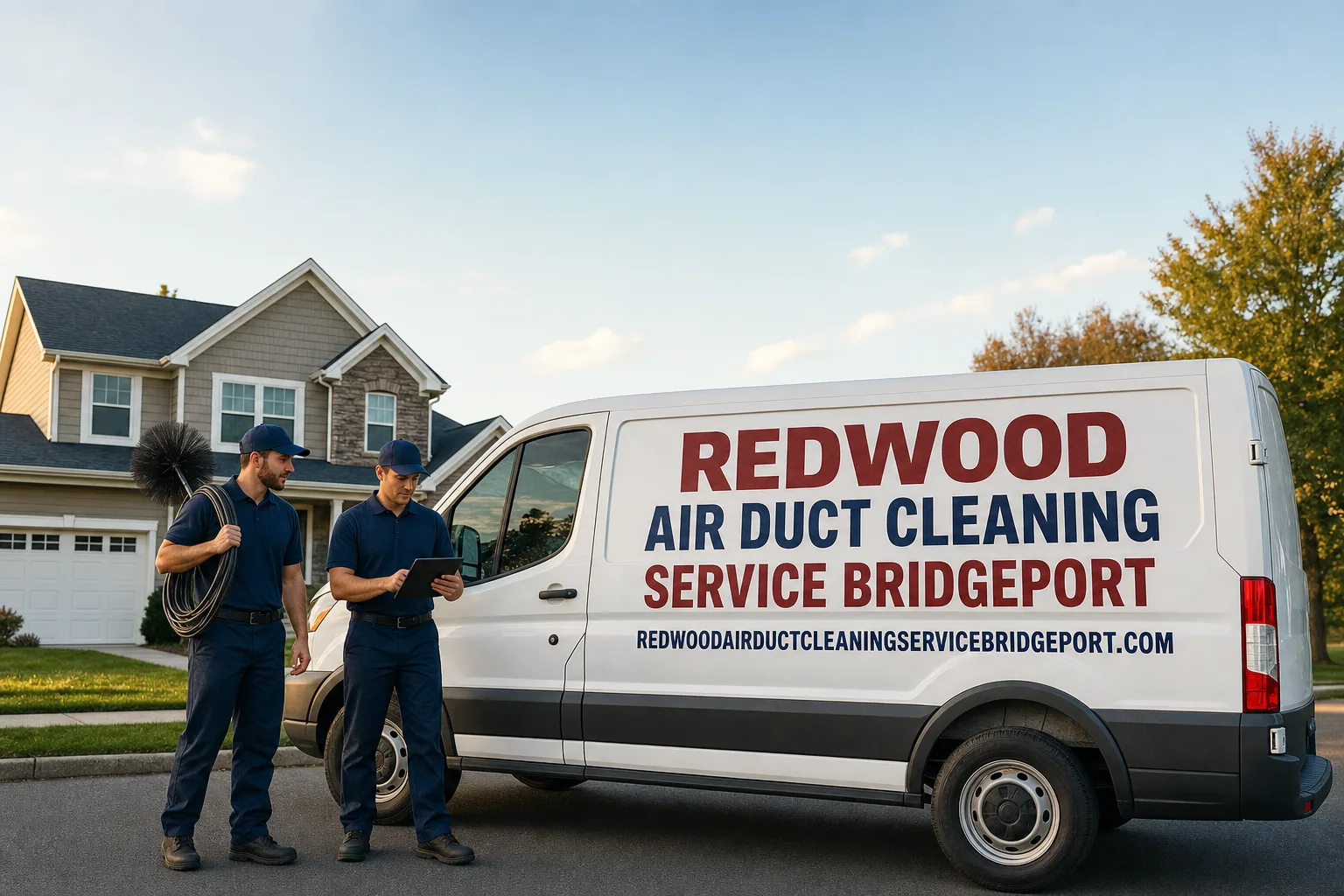
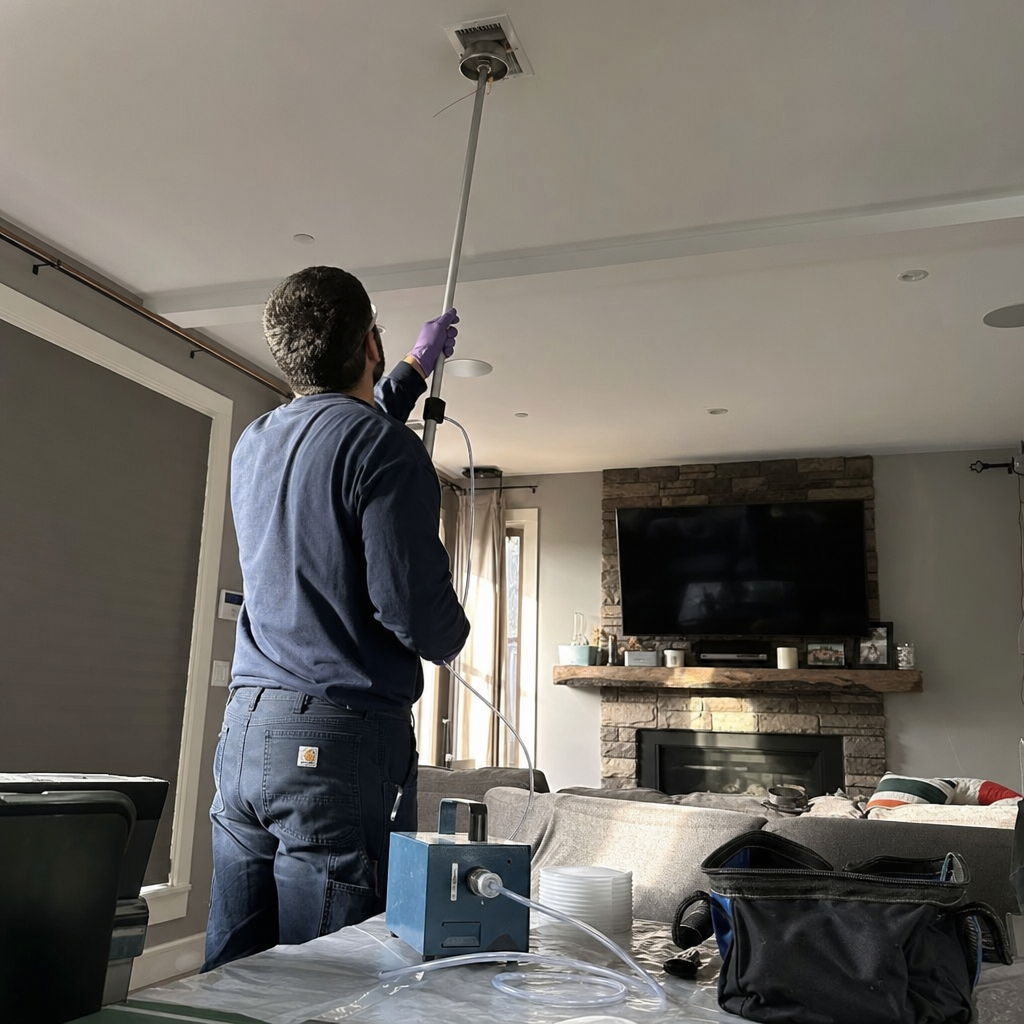
Fast, Reliable Air Quality & Sanitizing Across Port Jefferson Station
Air quality and sanitizing services in Port Jefferson Station typically run $280–$650 depending on scope, with mold treatment and UV light installation representing the higher end. Most Port Jefferson Station homeowners see us same-day or next-day because we’re already working the North Shore corridor regularly.
We know the 11776 zip well. Ryan leads every job personally, and after 11 years focused exclusively on duct systems, we’ve developed specific expertise for the oil-heat neighborhoods that dominate Port Jefferson Station. These post-war ranches and Cape Cods along Hallock Avenue, Old Town Road, and the side streets near the LIRR station present air quality challenges you won’t find in newer gas-heat communities. If you’re noticing persistent odors, visible debris around registers, or worsening allergies, call (833) 364-5125 — estimates are free, and we’ll give you a straight assessment of whether you need sanitizing, mold treatment, or full duct remediation.
Why Redwood Air Duct Cleaning Service Bridgeport Is Port Jefferson Station’s Preferred Air Quality & Sanitizing Company
We’ve built our reputation on being the documented, high-volume choice — nearly 1,100 homeowners reviewed us, and those reviews average 4.9 stars. That’s rare social proof in a trade where most competitors have dozens of reviews at best. Port Jefferson Station customers specifically mention Ryan’s willingness to show them what’s inside their ducts, not just quote a price and disappear.
Our response time to Port Jefferson Station is consistently same-day or next-day because we’re already serving the broader Suffolk County North Shore weekly. We don’t dispatch crews from a warehouse two counties away. Ryan knows the local housing stock: the 1950s–1970s ranches with original sheet-metal trunk-and-branch systems, the oil-fired furnaces that still dominate this market, the crawl spaces where uninsulated ducts sweat through humid summers.
That local pattern recognition matters. A technician from a gas-heat market won’t instinctively check for the gray-black soot shadow around supply registers that indicates a cracked heat exchanger. We’ve learned to photograph it, explain it, and make sure the homeowner understands that sanitizing ducts without addressing the source is a temporary fix at best. That’s the difference between a generalist HVAC crew and a duct specialist who’s spent 11 years in homes exactly like yours.
Our Air Quality & Sanitizing Services in Port Jefferson Station
Mold Treatment
Port Jefferson Station’s proximity to the Long Island Sound keeps relative humidity elevated through summer, and uninsulated duct runs in crawl spaces and slab edges in these older homes create conditions favorable to mold colonization. Standard sanitizing won’t kill established mold colonies — you need targeted mold treatment with proper containment and EPA-registered antimicrobial application. We use professional-grade equipment to access the full duct run, not just what’s visible at the register. In homes near the dense oak woodlands of the North Shore, where airborne pollen already overloads return-air grilles never sized for modern filtration, mold spores compound the respiratory burden significantly.
Bacteria Sanitizing
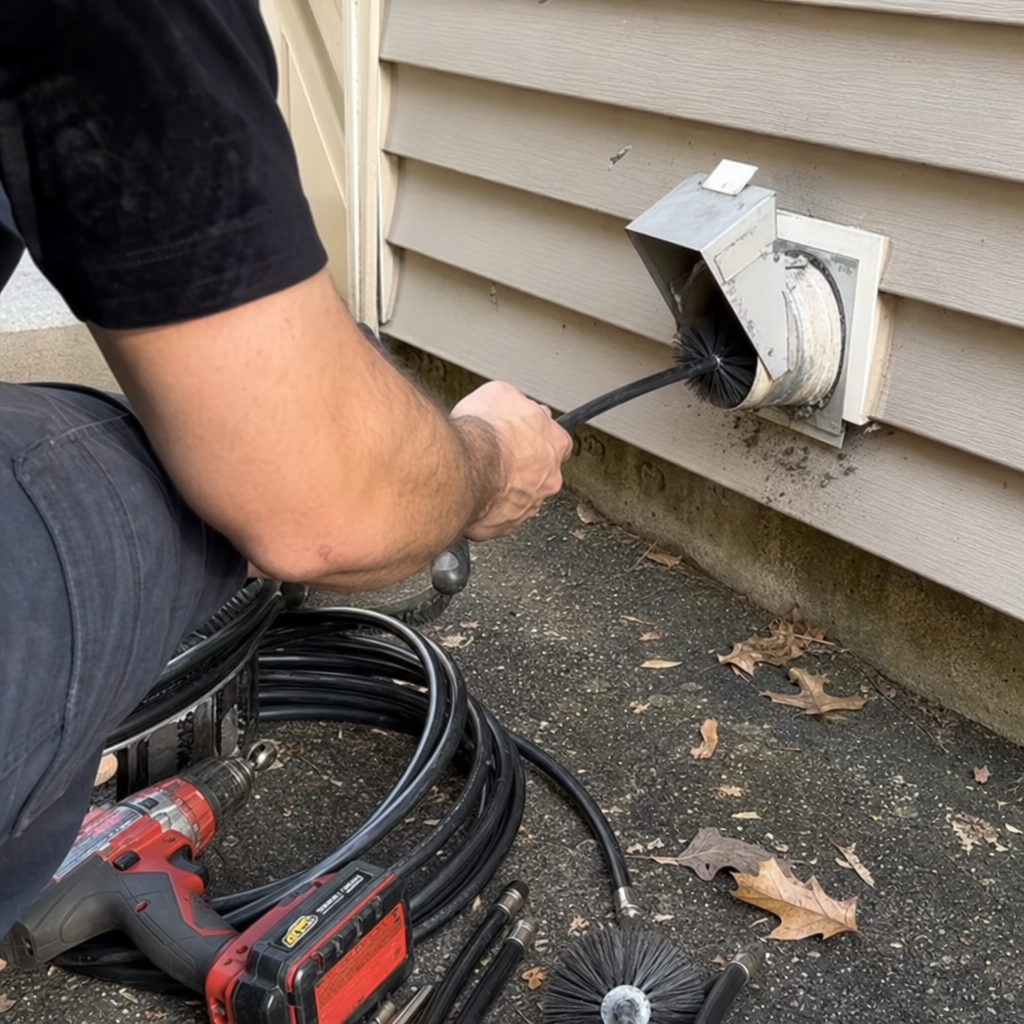
Bacteria sanitizing addresses the biological load that accumulates in duct systems over decades — particularly relevant in Port Jefferson Station’s oil-heat homes where combustion byproducts create a sticky film that traps organic material. We apply commercial-grade sanitizers through the full duct system using Rotobrush and Nikro equipment, reaching branch lines that hand-spray methods miss. For homes with pets, recent water intrusion, or occupants with compromised immunity, this service provides measurable reduction in airborne bacterial counts. It’s often paired with our Air Quality & Sanitizing team’s mold treatment when both contaminants are present.
Odor Removal
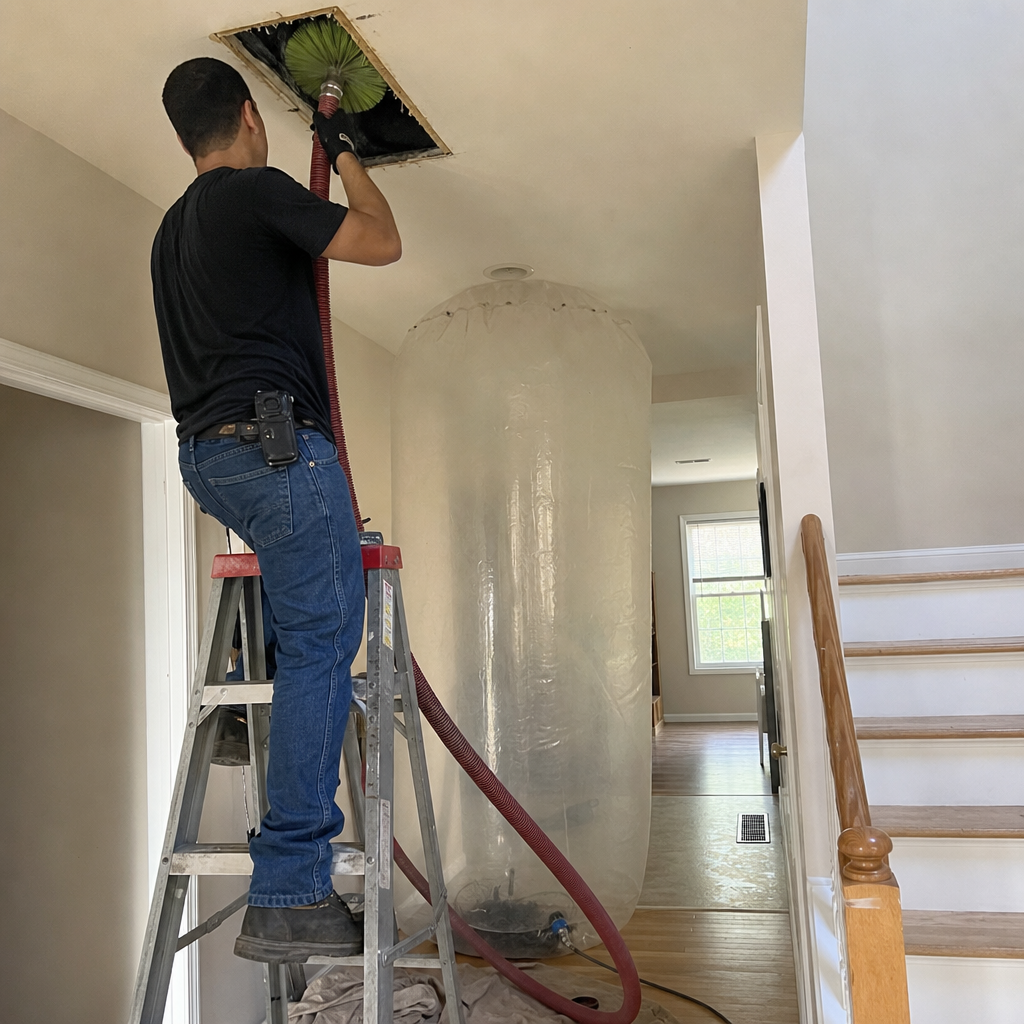
The persistent “old house” smell in Port Jefferson Station’s 1950s–1970s stock often traces directly to oil-heat soot embedded in duct liner, mold in humid crawl space runs, or degraded fiberglass shedding volatile compounds. Surface cleaning doesn’t reach the source. Our odor removal protocol involves identifying the specific contaminant — we use inspection cameras and particle counters, not guesswork — then applying the appropriate treatment. For oil-heat soot smells, we often find the heat exchanger crack that’s been pumping combustion gases into the airstream for years; until that’s flagged and replaced, any sanitizing is temporary.
UV Light Installation
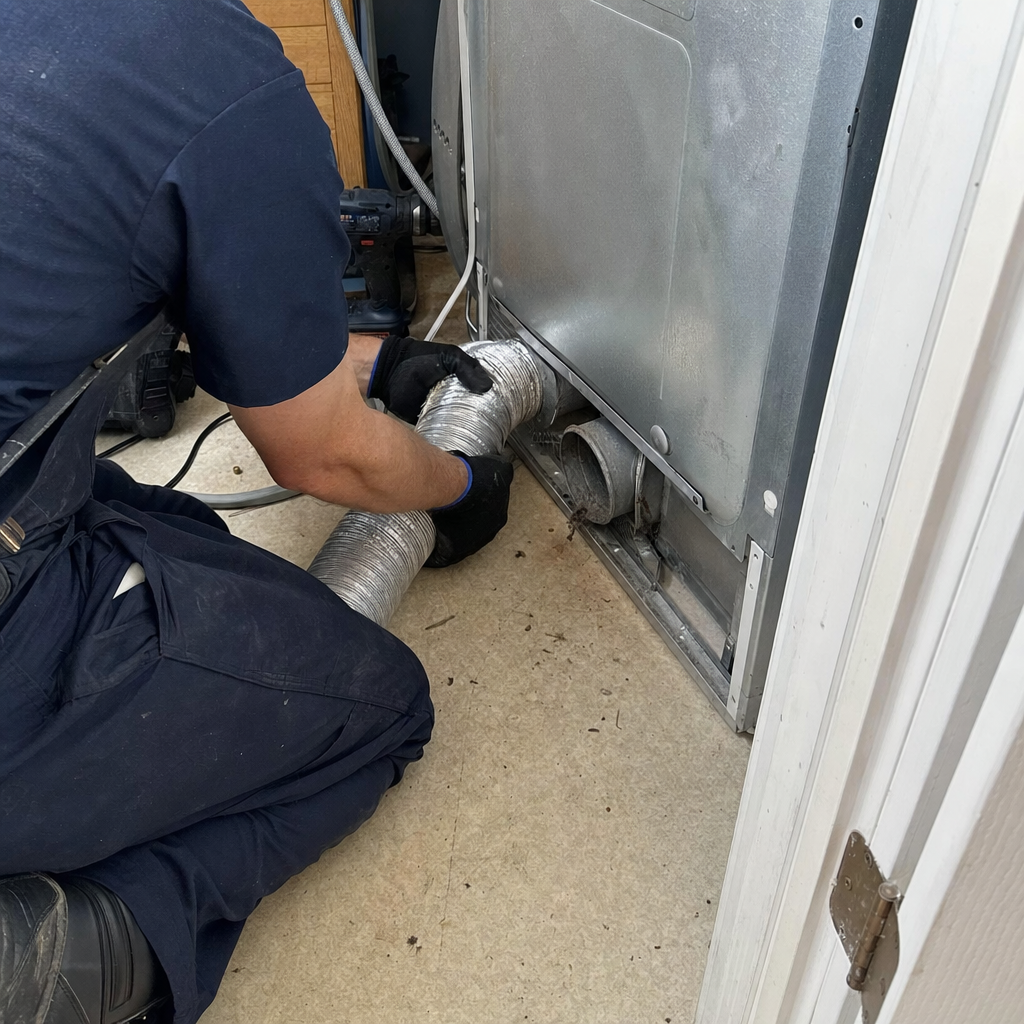
UV light installation is particularly effective in Port Jefferson Station’s humid North Shore climate, where mold recurrence is common even after treatment. We install Honeywell UV lights at the coil and supply plenum, the locations where standing water and organic material create optimal growth conditions. Unlike portable units that treat a single room, in-duct UV targets the entire airstream. For oil-heat homes, UV also helps break down the volatile organic compounds that cause persistent soot odors. We size the unit to your system’s airflow — a critical detail many installers skip — and position it for maximum exposure time without restricting airflow.
Air Purifier Install
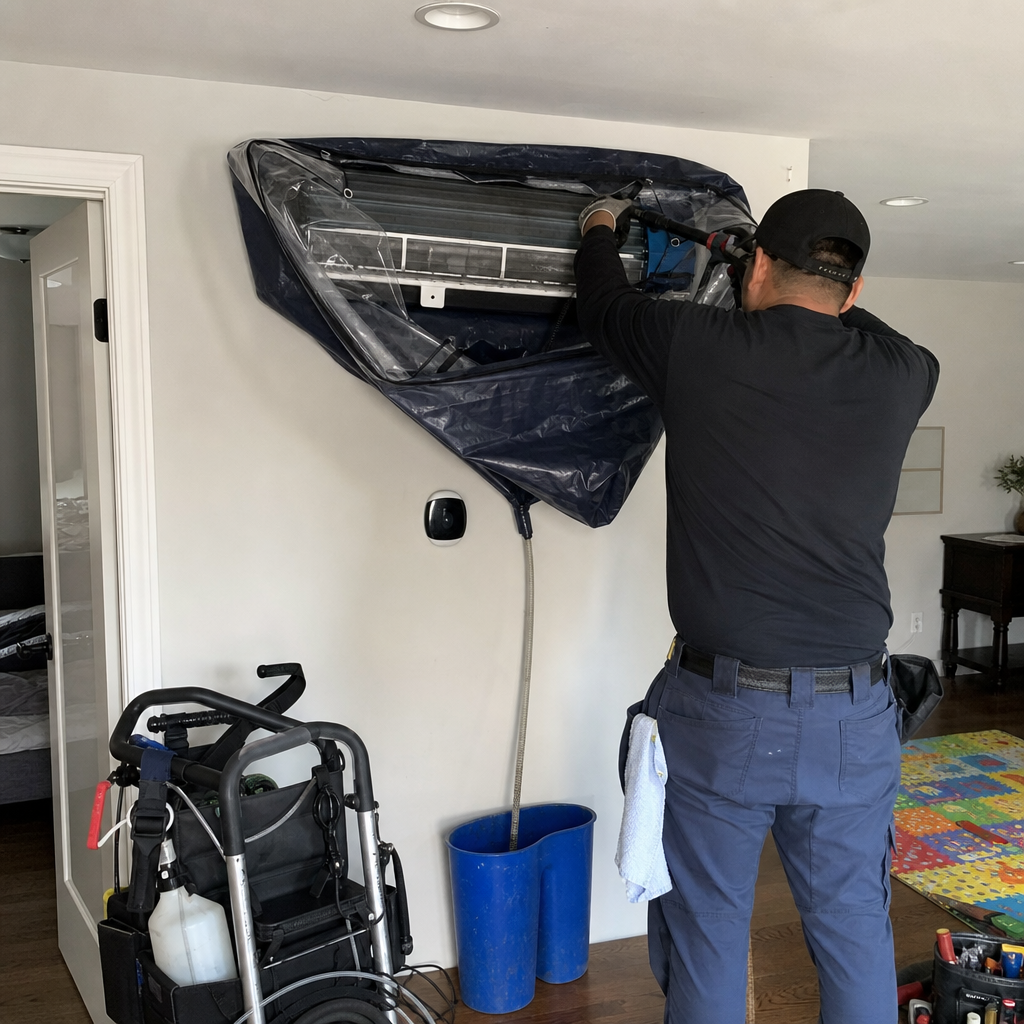
Whole-home air purifier installation addresses what duct cleaning and sanitizing alone cannot: continuous filtration of new particles entering the system. In Port Jefferson Station, where North Shore oak pollen counts rank among Long Island’s highest and oil-heat soot provides a constant fine-particle load, we typically recommend Aprilaire media air cleaners with MERV 16 filtration. These install at the return-air plenum and treat 100% of circulated air, unlike room units that only address isolated spaces. For homes with degraded fiberglass liner that’s shedding particles faster than it can be fully remediated, an air purifier provides interim protection while you decide on liner replacement or full duct retrofit.
What happens when you call
- 1
A real person answersNo phone trees — you reach a local pro.
- 2
You get an upfront price rangeHonest numbers before anyone is dispatched.
- 3
A background-checked tech heads outLicensed & insured, dispatched right away.
- 4
You approve before work beginsNothing starts until you say go.
Trusted Brands We Service in Port Jefferson Station
We deploy professional-grade Rotobrush and Nikro duct-cleaning systems — the same equipment commercial and industrial contractors use — on every residential job in Port Jefferson Station. For air quality and sanitizing specifically, we work with Honeywell UV lights, Aprilaire whole-home purifiers, and Guardsman antimicrobial treatments. We stock replacement lamps, filters, and treatment chemicals locally, so Port Jefferson Station customers aren’t waiting a week for a specialty part to ship. When Ryan leads your job, he’s selecting the specific product and configuration for your home’s actual conditions, not applying a one-size-fits-all kit.
Common Air Quality & Sanitizing Problems We See in Port Jefferson Station Homes
- Degraded fiberglass duct liner shedding particles. The interior fiberglass liner in 1950s–1970s trunk-and-branch systems commonly deteriorates after 50 years, releasing visible fibers into the airstream. Standard cleaning can’t fully remove embedded degradation — we assess whether liner replacement or full duct retrofit is the appropriate path.
- Mold colonization in uninsulated crawl space duct runs. High North Shore humidity meets cold duct surfaces in summer, creating condensation that supports mold growth in dark, enclosed spaces. We find this repeatedly in Port Jefferson Station’s slab-edge and crawl space configurations.
- Oil furnace soot recontamination from undiagnosed heat exchanger cracks. The gray-black soot shadow around supply registers is our telltale indicator. We’ve seen ducts sanitized and cleaned, only to blacken again within months because the source — combustion gases migrating through a cracked exchanger — was never addressed.
- Return-air grilles overwhelmed by pollen load. The dense oak woodland surrounding Port Jefferson Station generates some of Long Island’s highest airborne pollen counts, and original grille sizing from the 1960s simply wasn’t designed for modern filtration demands. This forces the system to bypass or clog filters, circulating unfiltered air.
Pricing for Air Quality & Sanitizing in Port Jefferson Station, NY
Here’s what Port Jefferson Station homeowners actually pay:
| Service | Typical Range |
|---|---|
| Bacteria sanitizing (whole system) | $280–$420 |
| Mold treatment (with containment) | $450–$650 |
| Odor removal protocol | $320–$480 |
| UV light installation (single unit) | $380–$550 |
| Whole-home air purifier install | $520–$780 |
| Combined sanitizing + UV package | $580–$820 |
Costs vary with system size, accessibility, and contamination severity. A 1960s ranch with degraded liner requiring partial replacement runs higher than a straightforward sanitizing job. Oil-heat homes with suspected heat exchanger issues may need HVAC contractor coordination we can facilitate. We provide upfront, itemized quotes before any work begins — no open-ended billing. Call (833) 364-5125 for your free Port Jefferson Station estimate; Ryan will inspect your system personally and explain exactly what you’re paying for and why.
We Also Serve Cities Near Port Jefferson Station
Our North Shore service area includes Terryville, Mount Sinai, Port Jefferson, and Coram — communities sharing similar post-war housing stock and oil-heat prevalence. If you’re in these areas and noticing the same register soot, musty duct odors, or allergy symptoms, we apply the same diagnostic rigor and local expertise. Call (833) 364-5125 to schedule.
Serving Port Jefferson Station, NY — Our Local Coverage Area
We’re based in the Port Jefferson Station area and know this community well. Use the map below to see our service coverage — if you’re nearby, we can almost certainly help.
FAQs — Air Quality & Sanitizing in Port Jefferson Station
It’s almost always oil-heat soot from a cracked heat exchanger, a problem concentrated in Suffolk County’s oil-fired neighborhoods like Port Jefferson Station. Combustion gases migrate through the crack and deposit carbon particles inside your ducts, which then blow out at registers. We photograph this shadowing for documentation, recommend HVAC contractor evaluation of the heat exchanger, and only proceed with sanitizing once the source is addressed — otherwise you’re paying for temporary results. Call (833) 364-5125 if you’re seeing this pattern; we’ll inspect and give you a straight assessment.
We can clean it, but degraded liner often requires replacement for lasting results. In Port Jefferson Station’s 1950s–1970s housing stock, we’ve found liner that’s fully separated from the duct wall, shedding particles that recontaminate the airstream within weeks of standard cleaning. Ryan assesses liner condition with camera inspection and gives you honest guidance: cleanable with enhanced extraction, or time to discuss liner replacement or full duct retrofit. Call (833) 364-5125 for a camera inspection — estimates are free.
Yes — in Port Jefferson Station’s humid North Shore climate, mold commonly grows in inaccessible crawl space duct runs where you won’t see it until it’s extensive. Musty odors, allergy symptoms that worsen when the system runs, or visible condensation on ductwork in summer are all indicators. We use moisture meters and inspection cameras to confirm colonization before recommending treatment, so you’re not paying for unnecessary service. Call (833) 364-5125 if you suspect hidden mold; we’ll verify before quoting.
A UV light helps, but only after the cracked heat exchanger producing the soot is repaired or replaced. UV breaks down volatile organic compounds that cause odor, yet it cannot stop new soot deposition from a continuing combustion leak. We install Honeywell UV lights as part of a complete protocol: flag the exchanger, coordinate HVAC repair, sanitize the system, then install UV for ongoing VOC control. Call (833) 364-5125 for an assessment of whether UV alone or full protocol is appropriate for your situation.
An air purifier helps ongoing filtration, but installing one over contaminated ducts is like putting a premium filter on a dirty pipe — you’re treating symptoms, not sources. In Port Jefferson Station’s oil-heat homes with decades of soot accumulation or degraded liner, the particulate load overwhelms even MERV 16 media until the duct system itself is addressed. We typically recommend cleaning or treatment first, then purifier installation for maintenance. Ryan will inspect your system and recommend the sequence that actually solves your air quality problem. Call (833) 364-5125 for a free Port Jefferson Station estimate.
On a recent job on Hallock Avenue, we found the interior fiberglass liner in a 1965 ranch fully degraded, shedding particles into the airstream. We flagged the soot shadow around a living room register, photographed it for the homeowner, and then installed a Honeywell UV light and an Aprilaire air purifier to address the mold and particulates. That’s the kind of complete-system thinking Port Jefferson Station’s older housing stock demands — and it’s why Ryan leads every job personally, not delegating to rotating subcontractors who don’t know this market’s specific failure modes.
Ready to improve your indoor air quality in Port Jefferson Station? Call (833) 364-5125 today for your free estimate. Ryan will inspect your system, explain what he’s found in plain terms, and recommend only the services that will actually solve your specific problem — whether that’s mold treatment, UV light installation, air purifier integration, or a complete sanitizing protocol tailored to your oil-heat, post-war home.
Written by Ryan Bell, Owner at Redwood Air Duct Cleaning, serving Port Jefferson Station and the North Shore with 11 years of dedicated duct system expertise.