
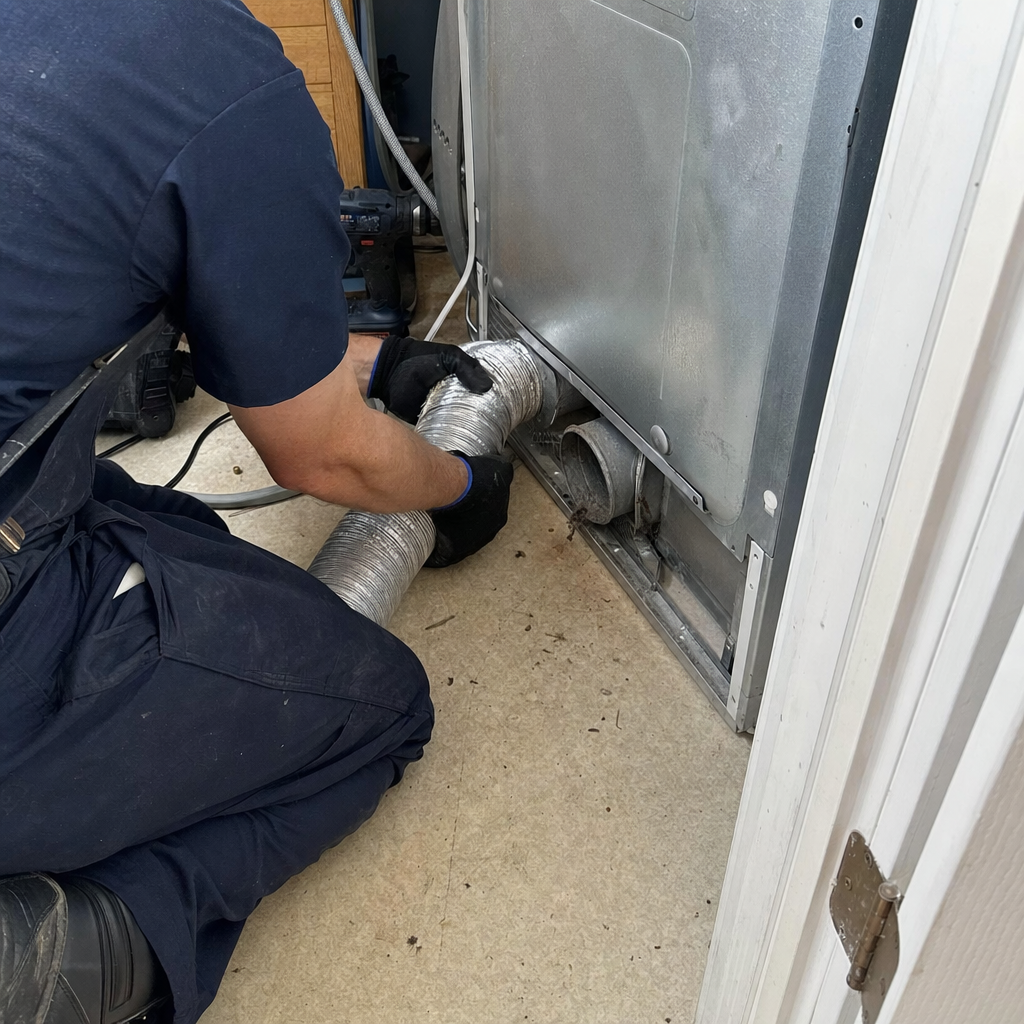
Air Duct Sanitizing Service in Bridgeport, CT: What It Actually Does and When You Need It
Air duct sanitizing service in Bridgeport typically runs $275–$450 for a whole-home treatment and should only be performed after thorough physical cleaning of the duct system. At Redwood Air Duct Cleaning Service Bridgeport, we apply antimicrobial treatment with our Nikro delivery system to homes where moisture, mold, or allergen conditions warrant it — not as a routine add-on. Call us at (833) 364-5125 for a free in-home assessment; Ryan Bell, our Owner & Lead Technician, evaluates every job personally before recommending sanitizing.
Bridgeport’s position directly on Long Island Sound gives it the highest average relative humidity of any major Connecticut city. That coastal moisture doesn’t stay outside — it infiltrates older duct systems year-round, especially in the basement air handlers common to the city’s converted two- and three-family worker housing. In a 1920s East Bridgeport three-family with forced-air retrofitted through structural cavities never designed for it, decades of humidity cycling create conditions that simple debris removal alone won’t address.
Cleaning vs. Sanitizing: The Distinction That Saves You Money
Most homeowners who call us asking for “air duct sanitizing service” actually need cleaning first, and some don’t need sanitizing at all. Here’s the difference:
- Air duct cleaning is physical debris removal — we use Rotobrush contact cleaning and high-velocity Nikro vacuum extraction to pull out dust, disintegrated duct lining, pet dander, construction residue, and particulate matter coating the interior surfaces.
- Air duct sanitizing is an antimicrobial treatment applied to clean duct surfaces to address biological growth or allergen reservoirs that persist after debris removal.
Sanitizing without thorough cleaning first is a waste of money. The antimicrobial agent cannot bond effectively to surfaces still coated in dust and debris — it sits on top of the particulate layer and gets blown into your living space the next time the fan cycles. We’ve seen competitors in the Bridgeport market skip the cleaning step, fog a product into dirty ducts, and charge for a “sanitizing service” that does virtually nothing. I’d rather explain it once on the job than have you call back wondering what you paid for.
Our process follows a strict sequence: inspect with remote camera, clean mechanically, verify debris removal, then — and only if conditions support it — apply sanitizing treatment with professional equipment that delivers even coating throughout the system.
When Does Sanitizing Actually Make Sense in Bridgeport?
After eleven years focused exclusively on duct systems in this market, we’ve developed clear criteria for when sanitizing is warranted versus when it’s not. Ryan Bell’s guidance is straightforward: recommend it when there’s a documented condition to treat, not as a default upsell.
Sanitizing is appropriate when:
- Mold or mildew has been confirmed in the duct system — visible growth on camera inspection or musty odor originating from supply registers
- A water intrusion event has occurred near the air handler: basement flooding, condensate pan overflow, or leak from an overhead pipe in a multi-family conversion
- A household member has documented allergy or asthma conditions, and dust-mite allergen control is part of their physician-advised environmental management
- The home has experienced a rodent or pest infestation in ductwork, requiring treatment beyond physical removal and sealing
Sanitizing is generally not warranted when:
- Ducts are simply dusty — cleaning alone resolves this completely
- No moisture condition exists and no biological growth is present
- The homeowner is looking for “fresher smelling air” — this usually indicates a source problem (dirty evaporator coil, clogged filter, or dead rodent) that sanitizing won’t fix
In Black Rock and along the Kings Highway East corridor, we routinely encounter 1960s–70s HVAC conversions that used fiberglass duct board or early flex duct to navigate around original steam-pipe chases. That material has degraded into fine particulate inside the airstream. Homeowners smell “something” and assume they need sanitizing; what they actually need is thorough removal of disintegrated duct lining, followed by evaluation of whether the remaining substrate can hold a sanitizing treatment or whether duct repair and sealing is the more appropriate next step.
Bridgeport’s Coastal Humidity: Why This Market Is Different
Bridgeport’s housing stock creates a unique risk profile for duct contamination that inland Connecticut cities simply don’t replicate at the same rate. The city is dominated by two- and three-family worker housing from roughly 1880–1930, concentrated in neighborhoods like the East Bridgeport Historic District and the Barnum–Palliser corridor. These dense, attached or semi-attached structures were originally heated by coal and steam boiler systems, then retrofitted with forced-air ductwork in the 1950s–70s through structural cavities — floor joist bays, closet chases, and wall voids — never engineered for air distribution.
The result is irregular duct geometry with dead-end runs, hard-to-reach elbows, and minimal slope for condensate drainage. Combined with pre-1950 foundations that lack modern vapor barriers, and Bridgeport’s persistent high humidity from direct Long Island Sound exposure, these systems accumulate moisture at rates we’ve measured meaningfully higher than in comparable inland cities like Waterbury or Meriden.
That moisture sustains dust-mite populations inside duct systems year-round. Dust mites require sustained relative humidity above 50% to survive; Bridgeport’s coastal climate delivers that condition continuously, making allergen control an ongoing maintenance concern rather than a one-time fix. For households with documented respiratory sensitivity, this isn’t theoretical — it’s a measurable indoor air quality factor that standard cleaning intervals may not adequately manage.
How We Deliver Sanitizing Service: Equipment That Matters
The difference between effective sanitizing and cosmetic fogging comes down to delivery equipment. Consumer-grade foggers and retail “duct cleaning” attachments deposit product unevenly, often fail to reach enclosed runs past the first few feet, and leave pooled residue that can corrode metal or degrade remaining duct lining.
We use the Nikro professional duct sanitizing system — the same equipment specified by commercial and industrial contractors — adapted for residential application. The system generates properly atomized particles sized to remain suspended in the airstream long enough to coat entire duct runs, including the irregular geometries common to Bridgeport’s retrofitted housing stock. A remote camera verifies even coverage before we seal the system and complete the job.
For homes with integrated air quality concerns, we coordinate sanitizing with Honeywell and Aprilaire filtration upgrades and Abatement Technologies containment protocols where disturbance of degraded materials requires isolation during work. This full-system approach — we clean it, seal it, and sanitize it — means one provider handles the entire duct ecosystem rather than routing you to multiple specialists who don’t communicate with each other.
What Air Duct Sanitizing Service Costs in Bridgeport
Pricing depends on system size, accessibility, and whether sanitizing follows our cleaning service or a competitor’s work that may need correction. These ranges reflect our actual Bridgeport market pricing:
| Service Component | Price Range |
|---|---|
| Whole-home air duct cleaning (foundation service) | $350–$650 |
| Antimicrobial sanitizing treatment (add-on to our cleaning) | $275–$450 |
| Standalone sanitizing (after verified cleaning by others) | $325–$525 |
| Duct repair & sealing (required when degraded lining is present) | $200–$600 per run |
| Combined cleaning + sanitizing + sealing package | $650–$1,200 |
We don’t quote sanitizing over the phone without inspection. The remote camera evaluation — included free with our estimate — determines whether your duct surfaces are clean enough to hold treatment, whether degraded materials need removal first, and whether moisture conditions require addressing before sanitizing will provide lasting benefit.
What to Ask Before Hiring Any Air Duct Sanitizing Service
Not every provider who advertises sanitizing delivers legitimate treatment. Here’s how to distinguish professional service from superficial fogging:
Do they inspect before quoting? Anyone who can price sanitizing without seeing your duct system is guessing — or planning to skip steps. We camera-inspect every job; in a recent call on North Avenue, the “mold” a homeowner was quoted $800 to treat turned out to be discolored dust accumulation that cleaning alone resolved.
Do they clean first, always? Sanitizing dirty ducts is ineffective by definition. If a provider offers sanitizing as a standalone service without requiring or performing thorough mechanical cleaning, you’re paying for performance they cannot deliver.
What equipment delivers the product? Consumer foggers and pump sprayers cannot achieve the particle size or pressure to coat full duct runs. Professional systems like our Nikro unit are specified for this application specifically.
Can they document the condition? Before-and-after camera footage should be standard. Nearly 1,100 homeowners have reviewed us at 4.9 stars in part because we show, not just tell — you’ll see exactly what we’re treating and why.
Do they understand local housing stock? A technician who doesn’t recognize Bridgeport’s retrofit duct configurations — flex duct crammed through steam-pipe chases, duct board degraded by decades of humidity cycling — cannot effectively treat them. Ryan Bell grew up in Black Rock and has spent eleven years working specifically in this market’s older housing stock.
FAQs
Whole-home air duct sanitizing service in Bridgeport typically costs $275–$450 when performed after our thorough cleaning, or $325–$525 as a standalone treatment following verified cleaning by another provider. The exact price depends on system size, duct accessibility, and whether degraded materials require removal first — we provide exact quotes after free in-home camera inspection. Call (833) 364-5125 to schedule; estimates are free.
Sanitizing treats mold that remains after physical removal, but it cannot eliminate established mold growth without prior mechanical cleaning — the antimicrobial agent cannot penetrate thick biological growth to reach the duct surface beneath. In Bridgeport’s humid climate, we typically find mold in basement air handlers and the first few feet of supply trunk; our process removes visible growth with contact cleaning, then applies sanitizing to address residual spores and inhibit recurrence. For extensive mold colonization, we may recommend Air Quality & Sanitizing evaluation to determine whether duct replacement is more cost-effective than repeated treatment.
Air duct sanitizing can reduce allergen reservoirs for households with documented dust-mite or mold sensitivity, but only as part of broader environmental management — it’s not a standalone cure. Bridgeport’s coastal humidity sustains dust-mite populations year-round in ways inland Connecticut climates do not, so allergen control here requires ongoing attention: regular cleaning intervals, humidity control at the air handler, and filtration upgrades rather than one-time treatment. We evaluate whether your specific duct conditions and household health profile justify sanitizing, or whether cleaning plus Honeywell or Aprilaire filtration delivers better value.
Cleaning removes physical debris; sanitizing applies antimicrobial treatment to clean surfaces. If you had ducts cleaned but still notice musty odor, visible mold recurrence, or allergy symptoms persist, the cleaning addressed particulate but not biological conditions — that’s when sanitizing becomes appropriate. However, if sanitizing was offered as an add-on during a cleaning visit without specific documented cause, you may have paid for treatment your system didn’t need. We’re straight about this: call (833) 364-5125 and we’ll evaluate whether your previously cleaned system actually warrants sanitizing, or whether another issue — degraded duct lining, moisture intrusion, or filter bypass — is the real problem.
Ready to Find Out If Your Bridgeport Home Actually Needs Sanitizing?
Don’t pay for air duct sanitizing service your system doesn’t need — and don’t skip it when Bridgeport’s humidity and housing stock have created genuine conditions that cleaning alone won’t resolve. Ryan Bell, Owner & Lead Technician at Redwood Air Duct Cleaning Service Bridgeport, evaluates every job personally with remote camera inspection and straight talk about what your ducts actually require. Call (833) 364-5125 today for a free estimate; we’ll show you exactly what we’re seeing and recommend only the services that make sense for your home.
Written by Ryan Bell, Owner & Lead Technician at Redwood Air Duct Cleaning Service Bridgeport, serving Bridgeport, CT.