
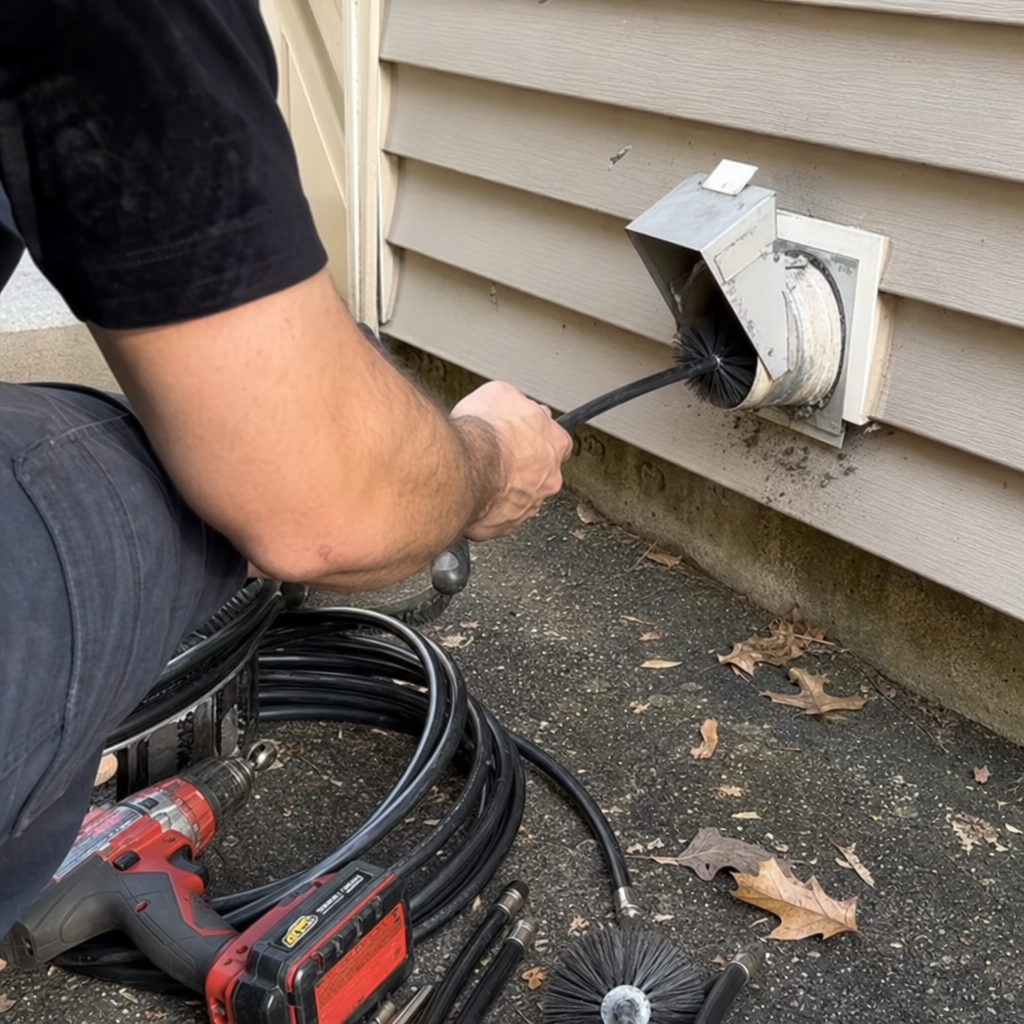
Signs You Need Dryer Vent Cleaning in Bridgeport, CT — And Why the Usual Warnings Fail in Older Attached Housing
If your clothes take longer to dry, the dryer exterior feels hot, or you smell burning lint, you need dryer vent cleaning. In Bridgeport’s attached two- and three-family housing with long horizontal vent runs through shared walls, these standard signs often appear too late — partial blockages can hide for years while slowly creating a fire hazard. For affordable dryer vent cleaning in Bridgeport, CT, Affordable Dryer Vent Cleaning in Bridgeport, CT offers same-day service. For a same-day inspection anywhere in Bridgeport, including the 06606 and 06615 ZIP codes, call Redwood Air Duct Cleaning Service Bridgeport at (833) 364-5125.
The Dryer That “Still Works” Is Often the Most Dangerous One
A dryer that takes ninety minutes instead of forty-five is an obvious sign. A dryer that takes sixty minutes and feels warm is a subtler one. In a Bridgeport attached two-family where the vent runs twenty feet through a shared wall before it exits, partial lint impaction at a turn can restrict airflow enough to cause a fire risk while the dryer technically still works — and the usual signs give you less warning than they would in a shorter run.
We’ve seen this exact scenario in the Barnum–Palliser Historic District and along Main Street corridor properties: owners who’ve lived with slightly longer cycle times for months, even years, never realizing that the extended run through structural cavities built for coal heat in 1910 is trapping lint in ways a modern suburban ranch home’s five-foot straight run never would.
Ryan Bell, our Owner & Lead Technician, grew up in Black Rock and has spent eleven years crawling through Bridgeport’s older housing stock. He’ll tell you straight: the most dangerous dryer vents he clears aren’t in homes where the dryer stopped working. They’re in homes where the owners thought everything was fine because the dryer still dried clothes, just slowly, and nobody had looked at the vent in a decade.
The Standard Signs — And Why They’re Incomplete Here
Every home improvement site lists the same warning signals. They’re not wrong, but they’re written for detached houses with short, direct vent paths. Here’s what to watch for, with the Bridgeport-specific context that changes how you interpret each one:
- Extended drying times. A normal load should dry in 35–45 minutes. In Bridgeport’s attached housing, a vent run over 15 feet with one or more bends — common in conversions along the East Bridgeport Historic District — can partially block without pushing cycle times past the hour mark. That “still acceptable” 55-minute load is already stressing your heating element and accumulating lint near ignition temperature.
- Hot or unusually warm dryer exterior. The cabinet should feel warm, not hot to the touch. But in humid coastal conditions, Long Island Sound moisture causes lint to clump and adhere inside vent runs rather than blow through. This means Bridgeport vents accumulate blockages faster than inland equivalents even with identical usage patterns — and the exterior heat builds more gradually, making the change harder to notice.
- Burning smell during operation. This is an emergency signal anywhere, but in Bridgeport’s older properties with original 1960s–70s flex duct retrofits, we’ve found crushed or kinked sections behind the dryer that restrict airflow before lint even reaches the wall run. The smell may indicate lint baking against a restricted section inches from the dryer connection, not deep in the wall where you’d expect.
- Excessive lint at the trap or around the door seal. If more lint is escaping the trap, airflow is already compromised. In high-humidity coastal environments, lint that would otherwise pass through instead sticks to duct walls at the first elbow, creating a seed point for progressive buildup.
- Visible lint at the exterior termination. By the time you see this, the blockage is substantial. In long horizontal runs through shared walls — typical of the Bassickville Historic District and similar dense neighborhoods — the exterior hood may show minimal lint even with significant interior accumulation because the blockage sits mid-run, not at the termination.
The Bridgeport-Specific Risk Factors Competitors Don’t Address
Three conditions unique to this market mean you need a more aggressive inspection schedule than generic guidance suggests:
Long Horizontal Runs Through Shared Structural Cavities
The city’s massive stock of late-19th and early 20th century worker housing — built during its manufacturing boom — was originally heated by coal and steam boiler systems, then retrofitted with forced-air ductwork in the 1950s–70s through structural cavities never designed for it. Dryer vents followed the same improvised paths. Combined with persistent high humidity from Bridgeport’s direct position on Long Island Sound, those narrow, improvised runs trap debris at rates meaningfully higher than in inland Connecticut cities like Waterbury or Meriden.
A vent run over 15 feet with one or more bends should be inspected annually regardless of whether the dryer seems fine. The risk of undetected impaction rises exponentially with run length, and in Bridgeport’s attached housing, 20-foot runs with two or three turns are standard, not exceptional.
Coastal Humidity and Lint Adhesion
Bridgeport sits directly on Long Island Sound, giving it the highest average relative humidity of any major Connecticut city. This isn’t abstract meteorology — it’s a mechanical factor in your dryer vent. Moist coastal air infiltrates the vent system, causing lint to clump and adhere to duct walls rather than remaining airborne and blowing through. We’ve extracted solid masses of humidity-compacted lint from vents in Avalon Gates properties where the owners reported “normal” drying times just six months earlier.
Degraded Retrofit Materials from the 1960s–70s
In Black Rock and along corridors where technicians routinely work, 1960s–70s HVAC conversions used fiberglass duct board or early flex duct to navigate around original steam-pipe chases. That material has since degraded into fine particulate inside the airstream. For dryer vents specifically, the same era’s thin-wall aluminum flex duct has often collapsed, kinked, or separated at joints — creating restriction points that accelerate lint accumulation in ways a smooth, rigid modern duct never would.
What Professional Inspection Reveals That Visual Checks Cannot
You can check the lint trap and peer at the exterior hood. Here’s what our Dryer Vent Cleaning service adds with professional-grade assessment:
- Camera confirmation of clear run end-to-end. We run inspection cameras through the full vent path, identifying partial blockages, separated joints, and degraded flex sections invisible from either end. In a recent job near Goosetown Park, the camera revealed a 40% blockage three feet into a shared wall — the exterior hood showed normal airflow, and the dryer was cycling only ten minutes long.
- Flow measurement at the exterior termination. We measure actual cubic feet per minute against the dryer’s rated output. A properly functioning vent should move 1,000–1,500 CFM for standard residential dryers. Readings below 800 CFM indicate restriction even if cycle times haven’t visibly changed.
- Identification of crushed or kinked flex duct behind the dryer. This is the most commonly missed failure point. Homeowners push dryers back against walls, compressing the transition duct into a sharp bend that restricts airflow before lint even enters the wall run. We replace these with proper rigid or semi-rigid connections as part of our service.
- Thermal imaging for hot spots. Our equipment identifies areas where restricted airflow is causing dangerous heat buildup in the duct path — particularly critical in Bridgeport’s long horizontal runs where lint can smolder in wall cavities before visible flame appears.
We use Rotobrush and Nikro professional duct-cleaning systems — the same equipment trusted in commercial and industrial applications — applied to residential jobs with the thoroughness that eleven years of focused duct work has taught us. We also work with Honeywell and Aprilaire equipment for integrated air quality assessment when duct systems connect to broader HVAC concerns.
What Dryer Vent Cleaning Costs in Bridgeport — And What Affects It
Pricing varies with access difficulty, run length, and whether repair or material replacement is needed. Here’s what Bridgeport homeowners typically see:
| Service Component | Typical Range |
|---|---|
| Standard dryer vent cleaning (straight run, accessible termination) | $120 – $180 |
| Long-run cleaning (15+ feet, multiple bends, shared wall access) | $180 – $280 |
| Flex duct replacement behind dryer (rigid or semi-rigid upgrade) | $45 – $95 |
| Exterior hood repair or replacement | $35 – $75 |
| Camera inspection with flow measurement (standalone or add-on) | $65 – $95 |
Most Bridgeport attached-housing jobs fall in the $180–$250 range due to run complexity. We provide upfront pricing before beginning work — no surprises, no pressure to add services you don’t need. I’d rather explain it once on the job than have you call back wondering what you paid for.
When to Schedule Inspection Regardless of Symptoms
Based on eleven years of fieldwork across Bridgeport’s neighborhoods, we recommend proactive inspection rather than waiting for warning signs — because in this housing stock, the signs often arrive too late:
- Annual inspection for any vent run exceeding 15 feet or with more than one bend
- Bi-annual inspection for properties with flex duct transitions or known degraded materials
- Immediate inspection if the property has changed hands and vent history is unknown
- Post-renovation inspection if drywall or insulation work occurred near the vent path
Ryan leads every job personally, ensuring you receive the Best Dryer Vent Cleaning in Bridgeport, CT. You’re not getting a rotating crew of subcontractors — you’re getting the person who built Redwood’s reputation across nearly 1,100 homeowner reviews, averaging 4.9 stars because he’s straight about what he finds and thorough in addressing it.
FAQs
Most Bridgeport homeowners pay between $120 and $280 for professional dryer vent cleaning, with the higher end typical for attached two- and three-family properties with long horizontal runs through shared walls. For detailed pricing, see How Much Does Dryer Vent Cleaning Cost? (2026 Price Guide) — Bridgeport, CT. For an exact quote on your specific vent configuration, call (833) 364-5125 — estimates are free.
Yes, and this is especially common in Bridgeport’s older attached housing where vents run 15–20 feet through shared walls with multiple bends. Partial blockages can restrict airflow enough to create fire risk while cycle times increase only marginally — from 40 minutes to 55 minutes, say — a change many owners dismiss until the blockage becomes critical. Annual professional inspection with camera and flow measurement catches these hidden restrictions.
Yes. Bridgeport’s position on Long Island Sound gives it Connecticut’s highest average relative humidity, and that moisture infiltrates vent systems year-round. Humid air causes lint to clump and adhere to duct walls rather than remaining airborne and exhausting properly. We’ve extracted significantly denser lint masses from coastal Bridgeport properties than from inland Fairfield County jobs with identical usage patterns — the humidity difference is mechanically significant, not merely uncomfortable.
DIY brush kits cost $20–$40 but rarely clear full blockages in long, bent runs, and they can compact lint deeper into the duct or damage old flex duct common in Bridgeport retrofits. Professional cleaning with camera verification, flow measurement, and proper equipment runs $120–$280 but confirms the vent is actually clear end-to-end — critical in attached housing where hidden blockages create fire risk without obvious symptoms. For the inspection that tells you which you need, call (833) 364-5125 for a free estimate.
Ready to Know What You’re Actually Breathing — and Venting?
If you’d rather have it looked at, Redwood Air Duct Cleaning Service Bridgeport offers a no-pressure assessment anywhere in Bridgeport — from Black Rock to the Barnum–Palliser corridor, across the 06606 and 06615 ZIP codes. Ryan Bell personally evaluates every vent system, shows you what the camera sees, and gives you straight guidance on whether cleaning, repair, or simply monitoring is the right call. Call (833) 364-5125 to schedule.
Written by Ryan Bell, Owner & Lead Technician at Redwood Air Duct Cleaning Service Bridgeport, serving Bridgeport, CT.